Supply Chain Resilience and Personalized Service

Project teams face increasing pressure to deliver complex commercial spaces on time and on budget, without compromise. From corporate headquarters to healthcare facilities to education institutions to government buildings, the success of a project often depends on the reliability of the partners involved.

While creating bold spaces remains a top priority, architects and designers are also evaluating how manufacturing decisions impact project schedules, risk management, and client satisfaction. One of the most effective ways to reduce uncertainty is by partnering with a US-based manufacturer. 

Greater Control Over the Supply Chain 

Over the past several years, global supply chain disruptions have highlighted the vulnerabilities associated with overseas manufacturing. Extended shipping times, port congestion and closures, material shortages, and more have created challenges that can threaten project schedules. Working with a domestic manufacturer, like MetroWall, offers greater control and visibility throughout the production, and buildout. Benefits include: 

  • Shorter, more predictable lead times 
  • Faster response to shifts in project timelines 
  • Flexibility when challenges arise 
  • Improved communication with stakeholders, as well as consistent site presence 

For large-scale commercial projects, having a team that can tailor its approach to your project’s unique needs helps minimize risk and alleviate stress. 

Faster Problem Solving When It Matters Most 

Even the most thorough project plans encounter unexpected challenges. Design revisions, field conditions, procurement changes, and accelerated schedules can require quick decisions and immediate action. A US-based manufacturer can respond far more efficiently than suppliers operating across multiple time zones and continents. Whether it’s a design modification, a replacement component, or an adjustment to a delivery schedule, domestic manufacturing enables faster collaboration between architects, designers, contractors, and manufacturers. This responsiveness can be the difference between maintaining project momentum and experiencing costly delays. 

Supporting Quality Through Direct Oversight 

Quality assurance is critical for commercial interiors, particularly when projects involve custom solutions or complex installations. Domestic manufacturing often allows for more direct oversight of production processes, quality control standards, and material sourcing. This level of accountability helps ensure that products meet project specifications. For architects and designers, confidence in product quality translates into fewer surprises during installation and a smoother project delivery experience. This allows A&D professionals to focus on other projects or vendors who may need their attention.  

Customer Service That Functions as a Project Resource 

Beyond manufacturing capabilities, exceptional customer service remains one of the most valuable benefits of partnering with a US-based manufacturer. Projects require ongoing coordination and communication between multiple stakeholders and vendors, meaning architects and designers need more than a supplier. They need a partner who understands their project’s requirements. 

When customer service teams are located close to the markets they serve, clients can expect: 

  • Faster response times and easier collaboration 
  • Access to knowledgeable technical experts like engineers and project managers 
  • Streamlined project coordination 
  • More personalized support throughout the project lifecycle 

This level of engagement helps A&D professionals, as well as other stakeholders, make informed decisions and resolve issues before they become obstacles. 

A Partner Invested in Long-Term Success 

The relationship between architects, designers, and manufacturers extends beyond a single project. Trusted partnerships are built through reliability, communication, and consistent performance. Choosing a US-based manufacturer provides more opportunities for collaboration throughout specification, design development, procurement, installation, and post-occupancy support. The result is a stronger partnership focused on achieving project goals and delivering exceptional outcomes for current and future projects. 

The MetroWall Difference 

At MetroWall, we understand that every project is unique and that success depends on more than delivering a product. Our domestic manufacturing model allows us to provide the responsiveness, quality, and service that architects and designers need to navigate today’s complex construction environment. 

By combining domestic manufacturing with dedicated project support, we help architect and design teams reduce risk, maintain schedules, and bring your design vision to life with confidence. Contact our teamhttps://metro-wall.com/contact/ to start collaborating.

Related Posts
Supply Chain Resilience and Personalized Service Project teams face increasing pressure to deliver complex commercial spaces on time and on budget, without compromise. From corporate headquarters to healthcare facilities to education institutions to government buildings, the
Maximize Daylight and Performance with Glass Interiors As the first day of summer approaches, natural light becomes a bigger focus (and feature) in commercial environments. Longer daylight hours and brighter interiors influence how people feel, work, and
What Flexible Workspaces Really Need The workplace conversation has evolved significantly over the past few years. What began as a discussion about returning to the office has shifted into something much larger: creating functional spaces

Maximize Daylight and Performance with Glass Interiors

As the first day of summer approaches, natural light becomes a bigger focus (and feature) in commercial environments. Longer daylight hours and brighter interiors influence how people feel, work, and interact within a space. For architects and designers, this seasonal shift also highlights an important design consideration: how to maximize daylight inside the workplace without compromising privacy, acoustics, or performance. 

End users are increasingly prioritizing environments that promote wellness. Studies continue to show that access to natural light improves employee satisfaction, productivity, and overall well-being. Not to mention, being in a bright and open space often makes people feel inspired. They support connection by offering open sightlines and daylight. For those looking to optimize natural light in a space, glass wall interiors are an obvious choice compared to traditional drywall options. However, the challenge is balancing transparency with functionality. 

Acoustic performance remains a priority for end users. Employees need spaces that support focused work, private meetings, and video conferencing without constant noise disruption. If sound privacy is a priority, designing spaces like these, with glass wall interiors that have a high STC rating is a must.  
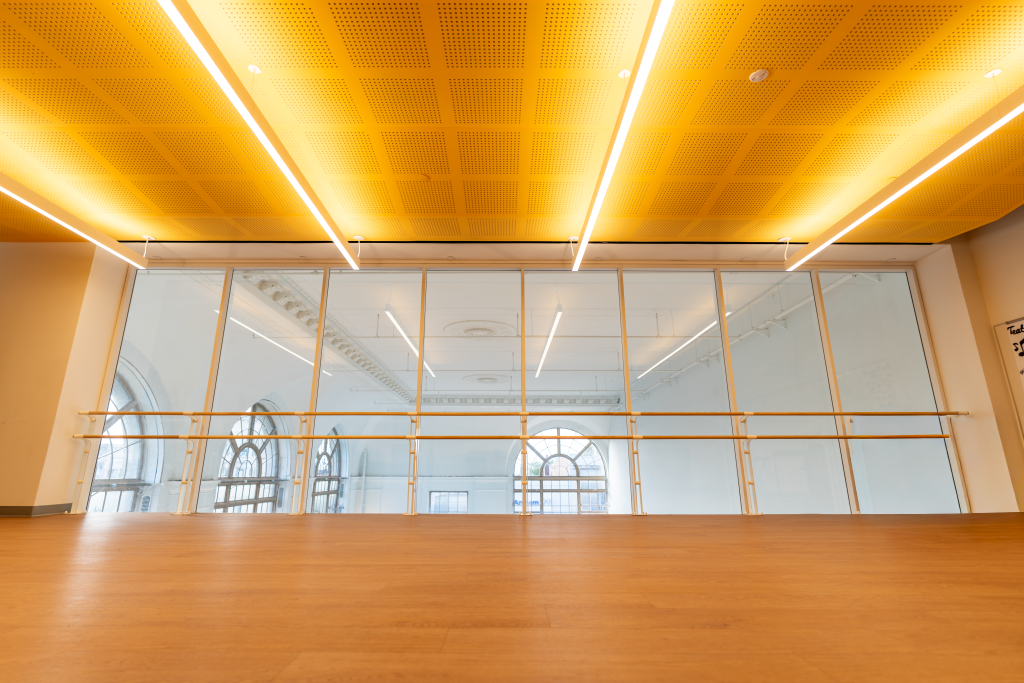
Visual privacy is another key factor. While transparency encourages collaboration and connection, certain spaces require visual separation. Frosted glass, banded privacy film, switchable glass, and strategic layout planning give designers greater control over where visibility is encouraged and where privacy is necessary. 
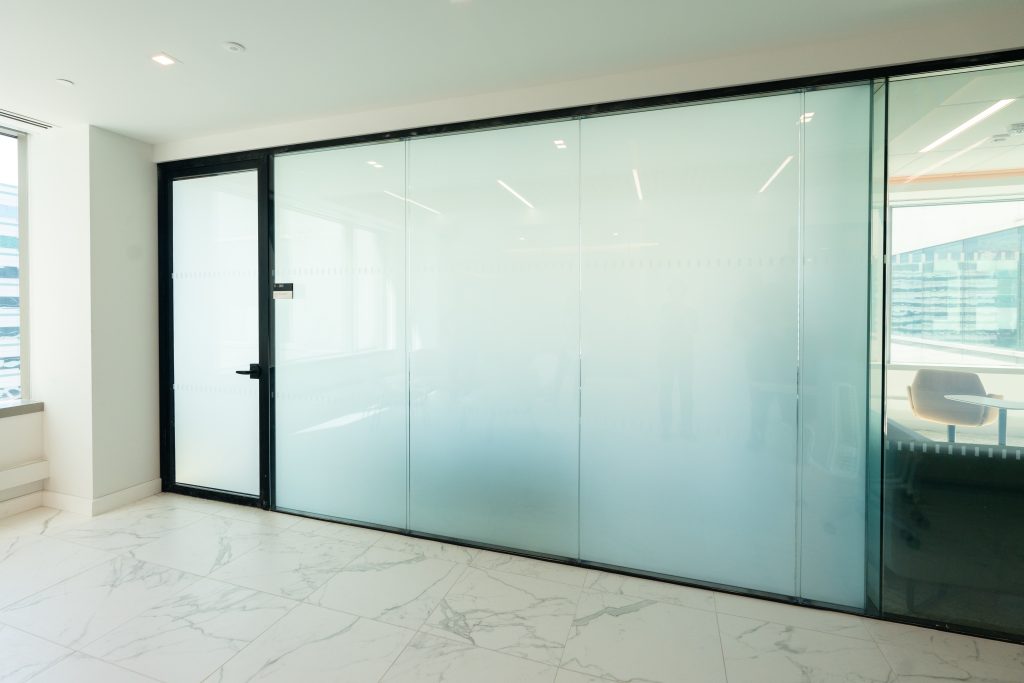
Glass wall systems also support wellness initiatives that continue to influence commercial real estate decisions. Daylight optimization may help reduce reliance on artificial lighting during daytime hours while supporting broader WELL building strategies.  

At MetroWall, we work closely with architects and designers to create glass wall solutions that support both aesthetics and performance. From high-acoustic meeting spaces to flexible office layouts that maximize daylight, our systems are designed to help workplaces feel more open, adaptable, and future-ready. As summer begins and daylight becomes more central to how we experience interior spaces, now is the perfect time to rethink how workplace design can better support wellness, flexibility, and long-term value.


Explore how glass wall systems can elevate your next project. Connect with our team, request a consultation, or explore our project gallery and product solutions.
Related Posts
Supply Chain Resilience and Personalized Service Project teams face increasing pressure to deliver complex commercial spaces on time and on budget, without compromise. From corporate headquarters to healthcare facilities to education institutions to government buildings, the
Maximize Daylight and Performance with Glass Interiors As the first day of summer approaches, natural light becomes a bigger focus (and feature) in commercial environments. Longer daylight hours and brighter interiors influence how people feel, work, and
What Flexible Workspaces Really Need The workplace conversation has evolved significantly over the past few years. What began as a discussion about returning to the office has shifted into something much larger: creating functional spaces

What Flexible Workspaces Really Need

The workplace conversation has evolved significantly over the past few years. What began as a discussion about returning to the office has shifted into something much larger: creating functional spaces people genuinely want to use. Today’s office environment must support collaboration, focused work, flexibility, wellness, and long-term adaptability all at the same time. For architects and designers, this creates both a challenge and an opportunity. 

The most successful workplaces are no longer designed around a single way of working. Instead, they are built to evolve. Flexibility now means more than open floor plans or shared desks. Modern workplaces require environments that can adapt to changing teams, shifting tenant needs, and evolving business priorities without requiring costly demolition and reconstruction every few years. 

This is why adaptable interior systems have become a major focus in commercial office design. Organizations are increasingly prioritizing spaces that support multiple functions throughout the workday. Conference rooms double as hybrid meeting spaces. Private offices become touchdown rooms. Collaboration zones transform into event spaces. The office must continuously respond to how employees actually work. For architects and designers, this shift has changed how space planning is approached. Flexibility is no longer treated as an optional feature. It is now more often than not a foundational design strategy. 

Glass wall systems allow teams to create spaces that feel open and collaborative while still offering privacy and acoustic control where needed. Unlike permanent drywall construction, operable systems, like the EXTEND Series, can be reconfigured as workplace needs to change. 

Acoustic privacy has also emerged as one of the defining workplace challenges in a hybrid work era. Employees may spend part of the day collaborating in open settings and the other part participating in virtual meetings or focused tasks. This means the office cannot simply prioritize openness at the expense of concentration. Choosing high-performance acoustic solutions, in concert with other systems (e.g., wall panels, ceiling systems, etc.), can support focused work environments while preserving the visual openness tenants and designers want. 

At MetroWall, we see flexibility as one of the most important drivers shaping modern interior architecture. Our glass wall systems are designed to support evolving workplace needs while delivering the clean aesthetics, acoustic performance, and long-term adaptability today’s projects demand. The office is no longer static. It must evolve alongside the people and organizations using it. 

As companies continue redefining the role of the workplace, adaptable interior environments will remain central to creating spaces that support productivity, wellness, and long-term value. 


Planning a future-ready workplace project? Request a meeting, explore our solutions, or connect with our team to discuss your next interior build. 

Related Posts
Supply Chain Resilience and Personalized Service Project teams face increasing pressure to deliver complex commercial spaces on time and on budget, without compromise. From corporate headquarters to healthcare facilities to education institutions to government buildings, the
Maximize Daylight and Performance with Glass Interiors As the first day of summer approaches, natural light becomes a bigger focus (and feature) in commercial environments. Longer daylight hours and brighter interiors influence how people feel, work, and
What Flexible Workspaces Really Need The workplace conversation has evolved significantly over the past few years. What began as a discussion about returning to the office has shifted into something much larger: creating functional spaces